
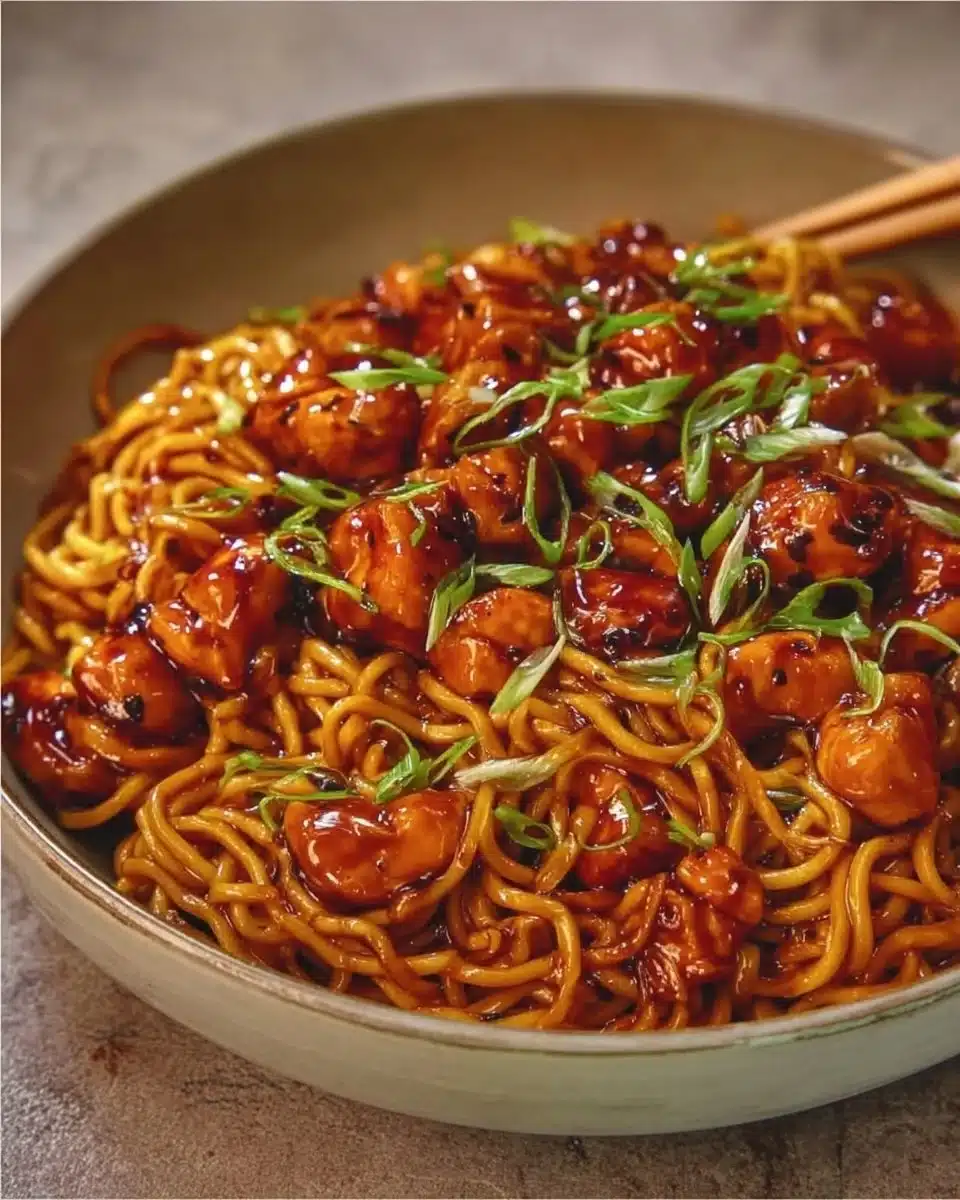
There’s something special about Sticky Garlic Chicken Noodles the way the sweet-salty aroma curls through the kitchen and draws everyone to the table. It is one of those meals that feels both homey and a little adventurous, perfect for a weekday supper or a weekend dinner where you want comfort with a touch of shine. Clara says you can make this even if you’ve never tossed noodles in a hot skillet before. You only need a few confident moves and a bit of patience to let the sauce do its magic.
If you love cozy garlic sauces, you might also enjoy this recipe for creamy garlic parmesan chicken pasta, which shares that same comforting flavor family but with a richer sauce and different textures.
Why You’ll Love Making This Sticky Garlic Chicken Noodles
This dish shows up in Clara’s kitchen when everyone needs something that feels like a hug. The sauce is sticky but not cloying, glossy and clinging to every noodle. The garlic is front and center, but balanced by honey and soy sauce, with a gentle heat if you add a pinch of chili flakes. The chicken stays tender inside, with a lightly golden edge where it met the pan.
It’s easy to make a little ahead, especially the sauce. The cornstarch does two things: it gives the chicken a delicate crust when you sear it, and it thickens the sauce so it wraps the noodles. You can use rice noodles for a lighter bite or egg noodles for a more classic comfort feel.
This recipe is forgiving. Don’t worry if the noodles stick a bit at first. Toss them with a splash of oil or a little reserved sauce, and they’ll separate beautifully. If you want to simplify further, cook the chicken and noodles ahead and finish quickly in the skillet when it’s mealtime.
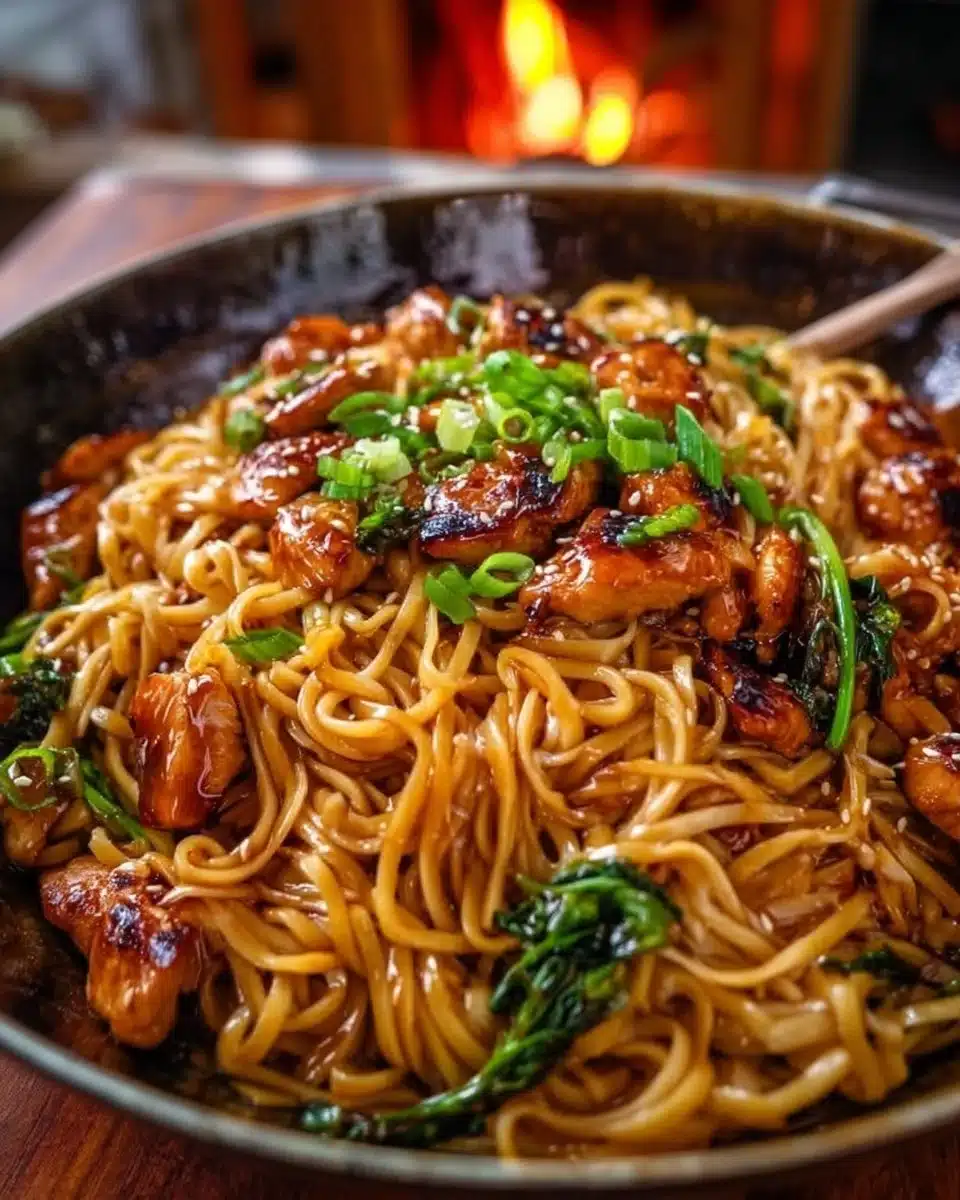
Step-by-Step: How to Make Sticky Garlic Chicken Noodles
“Cooking isn’t about perfection. It’s about enjoying every delicious step.”
Overview: Start by making a simple, balanced sauce. Toss the chicken in cornstarch to give it a tender-crisp surface. Cook the chicken in a hot skillet until golden, then add the sauce to bubble and thicken. Prepare the noodles while the chicken cooks, then bring everything together in the pan so the noodles get coated in glossy sauce.
Before you cook, set out everything you need. Measure the sauce ingredients into a small bowl, have your minced garlic and grated ginger ready, and make sure the noodles are fresh or pre-soaked if needed. A tidy mise en place will make these steps smooth and enjoyable.
Ingredients You’ll Need for Sticky Garlic Chicken Noodles
1 lb chicken breast or thighs, cut into bite-sized pieces (thighs are juicier; breasts are lean and quick-cooking).
1/4 cup soy sauce (use low-sodium if you prefer less salt).
3 tbsp honey (balances the soy and gives that sticky glaze).
4 garlic cloves, minced (fresh gives the best aroma and bite).
1 tsp grated ginger (fresh adds brightness; powdered works in a pinch).
1/2 tsp red chili flakes (optional for heat; adjust to taste).
2 tbsp cornstarch (helps create a glossy, clingy sauce).
2 tbsp vegetable oil (or any neutral oil with a high smoke point).
8 oz noodles (rice noodles or egg noodles) (choose texture you prefer).
2 green onions, chopped (for freshness and color).
1 tsp sesame seeds (optional, for a toasty finish).
Use real honey for a smooth sheen. Fresh garlic and ginger make a world of difference. If you like nuttiness, a teaspoon of toasted sesame oil at the end brightens the dish.
Directions: Cooking with Confidence
- In a bowl, mix soy sauce, honey, garlic, ginger, and chili flakes to make the sauce. Stir until the honey is fully dissolved and the sauce looks even. Taste and adjust: add more honey for sweetness or a splash of soy for salt.
- Toss chicken pieces with cornstarch until evenly coated. Shake off any excess cornstarch so coating is light and even. This will help the chicken brown without getting gummy.
- Heat vegetable oil in a large skillet or wok over medium-high heat. The pan should be hot enough that a drop of water sizzles and evaporates quickly. A hot pan is key to good searing.
- Add chicken and cook until golden and cooked through, about 6–8 minutes. Don’t crowd the pan; work in batches if needed. Stir occasionally so all sides get a turn and watch for a light golden crust. The chicken should register 165°F in the thickest part if you use a thermometer.
- Pour the sauce over the chicken and stir to coat. Let it simmer and thicken for 1–2 minutes. The sauce will bubble and become glossy as the cornstarch activates. Stir gently until it clings to the chicken.
- Cook noodles according to package directions. Drain and toss with a little oil if desired. If you are using rice noodles, soak according to instructions and then briefly dunk in hot water to finish. Egg noodles are forgiving and hold up well.
- Add noodles to the skillet and toss to combine with the chicken and sauce. Use tongs or chopsticks to lift and turn until noodles are evenly coated. If the sauce is too thick, add a splash of hot water or chicken broth to loosen it.
- Garnish with chopped green onions and sesame seeds before serving. Add a final drizzle of toasted sesame oil if you like that toasty aroma. Serve immediately while the noodles are glossy and warm.
If a step feels too fast, pause and breathe. Cooking is about rhythm. Hot pan, quick sear, and patient simmer will give you that restaurant-style finish at home.
How to Serve Sticky Garlic Chicken Noodles and Make It Shine
Serve the noodles hot from the pan so the sauce looks shiny and thick. Spoon noodles into shallow bowls and top with extra green onions for color. Arrange a few pieces of chicken on top so each person gets a mix of meat and noodle.
Pair this dish with simple sides like steamed broccoli or snap peas to add a crisp contrast. A light cucumber salad with rice vinegar and a pinch of sugar cleanses the palate and adds freshness.
For a family-style feel, put the skillet on the table and let everyone help themselves. Offer extra chili flakes, soy sauce, and toasted sesame oil on the side so each person can adjust flavors to their liking.
How to Store Sticky Garlic Chicken Noodles for Later
Cool the leftovers quickly and store in an airtight container in the refrigerator for up to 3 days. Arrange the noodles and chicken together; the sauce will keep them moist.
To reheat, warm gently in a skillet over medium heat, adding a splash of water or broth to loosen the sauce. Toss frequently until heated through, about 4–6 minutes. Alternatively, use a microwave-safe dish and reheat in 30-second intervals, stirring between each interval to prevent hot spots.
For longer storage, freeze in a freezer-safe container for up to 2 months. Thaw overnight in the refrigerator before reheating. Note that rice noodles may soften after freezing, so for best texture freeze only the chicken and sauce, and make fresh noodles when you reheat.
If you want a meal that holds up well for reheating, consider slightly undercooking the noodles at first. Then finish them in the skillet with the sauce so they don’t become mushy the next day.
Clara’s Tips for Success
- Dry the chicken pieces with a paper towel before tossing with cornstarch. Dry surfaces brown better and give you more golden bits.
- Keep your pan hot but not smoking. Too cool and the chicken will steam; too hot and the sauce will burn. Aim for a steady sizzle.
- If the sauce gets too thick, thin it with hot water or warm chicken broth, one tablespoon at a time. You want it glossy and clingy, not gluey.
- Use fresh garlic and ginger for the clearest, brightest flavor. If using powdered ginger, cut it in half and add a squeeze of lemon if you want brightness.
- If you prefer a nuttier finish, add a teaspoon of toasted sesame oil at the end and toss quickly. It’s strong, so a little goes a long way.
These are small moves that make a real difference. They will help you get repeatable results and build confidence.
Simple Variations to Try
- Sticky Garlic Peanut Noodles: Stir in 2 tablespoons of peanut butter to the sauce for a creamy, nutty twist. Finish with chopped peanuts. This gives a Thai-inspired flavor profile.
- Spicy-Sweet Kick: Add an extra 1/2 teaspoon of red chili flakes or 1 tablespoon of gochujang for a deeper, spicier note. Gochujang adds fermentation complexity and richness.
- Veggie-Loaded: Toss in thinly sliced bell peppers, shredded carrots, and baby bok choy during the last 2 minutes of cooking for color and crunch. Stir-fry the veggies briefly so they stay crisp.
- Citrus Brightness: Finish with a teaspoon of fresh lime or lemon juice to cut the sweetness and brighten the overall taste. This works especially well if you used dark soy or a sweet honey.
- Slow-Cooker Style: Cook the chicken with the sauce on low for 3–4 hours, then thicken with a cornstarch slurry and add noodles at the end. For a slow-cooker adaptation check out a crockpot garlic-parmesan chicken pasta for inspiration on low-and-slow methods that still produce tender meat.
Each variation keeps the same heart of the recipe but shifts the character slightly. Pick what feels good for your meal and pantry.
FAQs About Sticky Garlic Chicken Noodles
Can I make this ahead of time?
Yes. You can cook the chicken and prepare the sauce up to a day ahead. Store them together in the fridge and reheat gently. If you want the best noodle texture, cook the noodles just before serving or reheat the chicken and pour over freshly cooked noodles.
Which noodles work best?
Egg noodles give a chewy, comforting bite. Rice noodles are lighter and soak up the sauce well. Both work. For a sturdier texture, choose thicker egg noodles or udon. If you’re unsure, egg noodles are the easiest and least likely to fall apart.
How do I stop noodles from sticking?
Toss drained noodles with a small drizzle of oil right after cooking and before adding to the skillet. Work quickly and use tongs to separate them as you combine with the sauce.
What if my sauce is too thin or too thick?
If too thin, allow it to simmer a minute longer to reduce and thicken. If too thick, add hot water or broth one tablespoon at a time until it reaches the desired consistency.
Can I use boneless skinless chicken thighs instead of breasts?
Absolutely. Thighs are more forgiving and remain juicy when pan-seared. If you use thighs, check for doneness with a thermometer or cut a piece to make sure it’s cooked through.
How do I add vegetables without making the dish soggy?
Quickly stir-fry vegetables over high heat so they keep their bite. Add faster-cooking veggies like bok choy or snow peas at the end, and denser ones like carrots earlier so everything finishes at the same time.
Troubleshooting and Comforting Adjustments
If the sauce looks clumpy after you add it to the pan, remove the chicken briefly and whisk the sauce in a small saucepan with a little water until smooth. Then return the chicken and pour the smooth sauce over. This helps if the cornstarch formed lumps.
If the dish tastes too salty, add a teaspoon of sugar or more honey to rebalance, or a splash of citrus to brighten and counteract the salt. If too sweet, add a little more soy sauce or a squeeze of lemon.
If the garlic gets bitter, it probably cooked too long at too high a heat. Lower the temperature and add a little sauce or liquid, scrape the pan gently, and finish cooking at a gentler simmer. The garlic becomes mellow and fragrant when it is cooked just long enough to lose its raw edge.
Build Confidence with Practice
The first time you make this, move slowly through each step. Measure the sauce, dry the chicken, and set the pan up so everything is within reach. Listen for the sizzle when the chicken hits the pan. Watch the sauce as it thickens; you will see it change from runny to glossy. Taste as you go and adjust small bits at a time.
Remember, cooking is a set of small, deliberate choices. A hot pan, a quick sear, and a patient simmer will get you the result you want. Each time you make it, you will learn little things about your stove, your pan, and your family’s tastes.
Clara’s Final Encouragement
You’ve got this. Sticky Garlic Chicken Noodles is one of those recipes that rewards attention with big flavor. The sauce is kind to improvisation. If you need to skip an ingredient or swap in what you have, the core idea remains the same: savory soy, sweet honey, bright garlic, and a little cornstarch to bring it all together.
If you want a protein-packed meal with a different flavor twist, try pairing your weeknight cooking with ideas from other hearty chicken dishes. You’ll find the techniques translate across recipes and make the kitchen more comfortable and familiar every time you cook.
Conclusion
I hope this Sticky Garlic Chicken Noodles helps you discover how simple and rewarding homemade cooking can be. You’ve got this. If you want an instant inspiration for a garlic-forward noodle dish, check out this quick and flavorful version called 20 minute Crispy Garlic Chicken Noodles for another approach. And if you are curious about a peanutty pressure-cooker twist, take a look at Instant Pot Sticky Garlic Peanut Noodles with Chicken.
Sticky Garlic Chicken Noodles
Ingredients
Method
- In a bowl, mix soy sauce, honey, garlic, ginger, and chili flakes to make the sauce. Stir until the honey is fully dissolved and the sauce looks even. Taste and adjust.
- Toss chicken pieces with cornstarch until evenly coated. Shake off any excess cornstarch.
- Heat vegetable oil in a large skillet or wok over medium-high heat.
- Add chicken and cook until golden and cooked through, about 6–8 minutes. Do not crowd the pan.
- Pour the sauce over the chicken and stir to coat. Let it simmer and thicken for 1–2 minutes.
- Cook noodles according to package directions. Drain and toss with a little oil if desired.
- Add noodles to the skillet and toss to combine with the chicken and sauce.
- Garnish with chopped green onions and sesame seeds before serving.
- Serve immediately while the noodles are glossy and warm.
