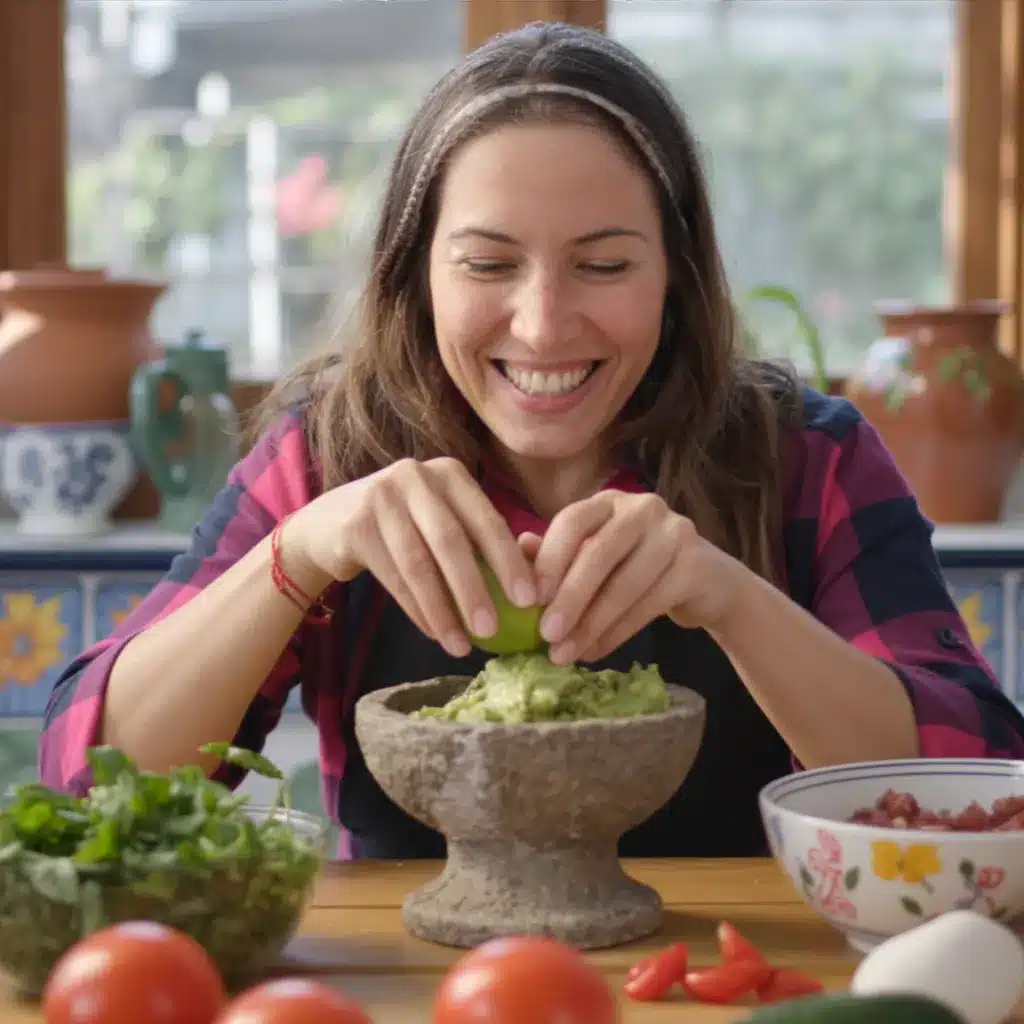
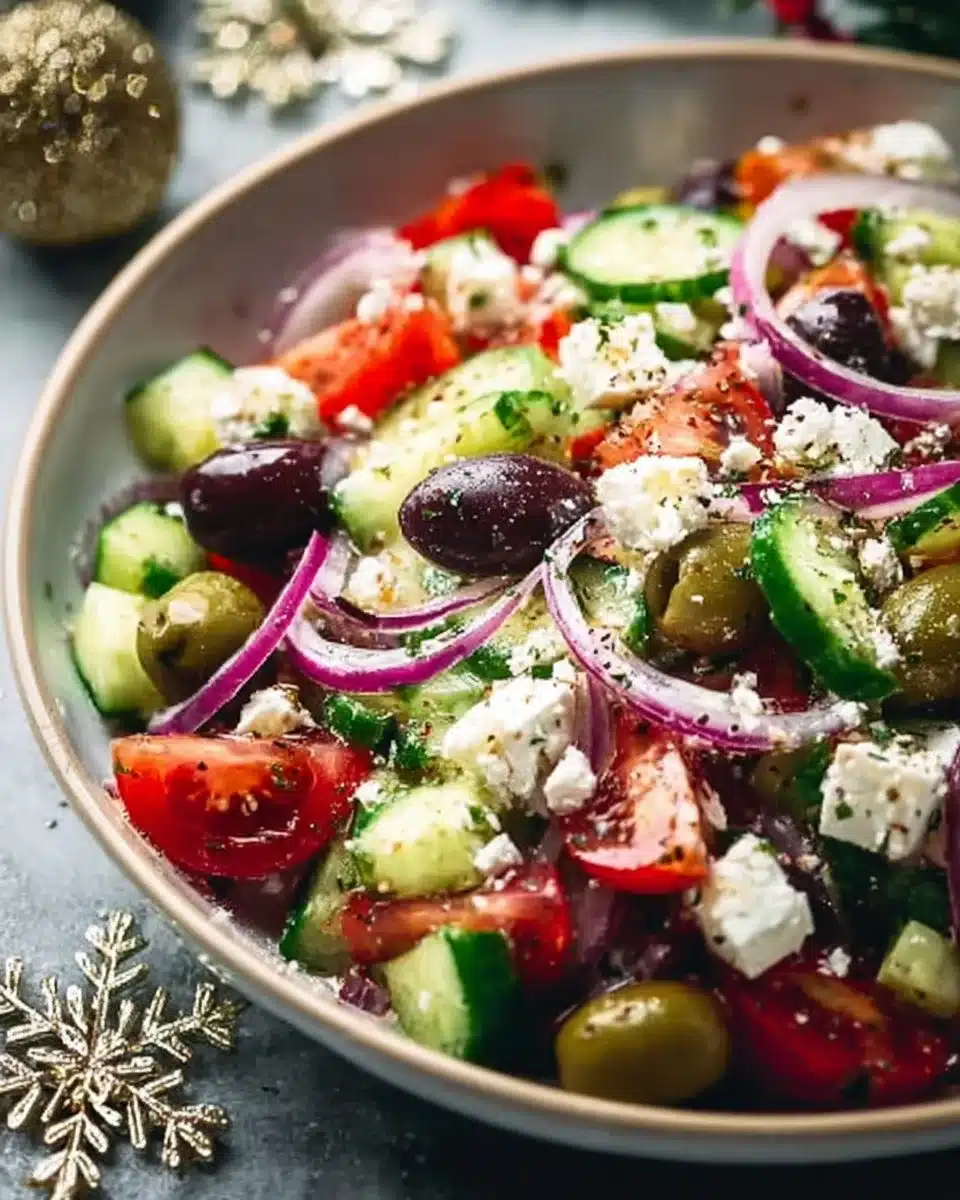
There’s something special about Best Greek Salad the bright scent of lemon and olive oil, the snap of cucumber, and the way a bowl of fresh ingredients makes even a simple weeknight feel like a small celebration. It’s the kind of recipe that welcomes conversation, quick hands, and a little curiosity. Clara’s in the kitchen beside you, smiling and ready to help you make something honest and delicious.
This salad is forgiving, fast, and full of contrasts: crunchy vegetables, creamy feta, salty olives, and a dressing that ties everything together. Whether you’re feeding yourself after a long day, bringing a dish to a potluck, or crafting a light dinner alongside grilled chicken, this Best Greek Salad is a dependable choice. If you want a quick reference or another take on a Greek-style salad that leans on fresh produce, check this helpful Best Greek Salad recipe that inspired some of my favorite measurements and techniques.
Why You’ll Love Making This Best Greek Salad
This is the salad I reach for when I want something that feels homemade, satisfying, and healthy without fuss. It celebrates good ingredients and gentle technique. The flavors are classic and recognizable: lemony brightness, the briny punch of Kalamata olives, the aromatic whisper of oregano, and a creaminess from crumbled feta that makes every bite feel complete.
That sense of comfort comes from simplicity. You do not need perfect knife skills or a pantry full of exotic items. A few fresh vegetables and a small bottle of extra virgin olive oil are all you need. The kitchen rhythm is easy to learn: chop, whisk, toss, taste. Along the way you’ll notice little wins the satisfying snap when you cut through a cucumber, the way juice from a halved tomato beads on the dressing, and the gentle crumble of feta as you scatter it across the bowl.
This dish also works well for sharing. It scales easily if you’re feeding a family or prepping a potluck. It also keeps well for a day or two when stored properly, which means you can make it ahead and still have that fresh, lively flavor. If you like trying variations, I’ll show you several ways to shift this salad from classic to playful without losing what makes it great.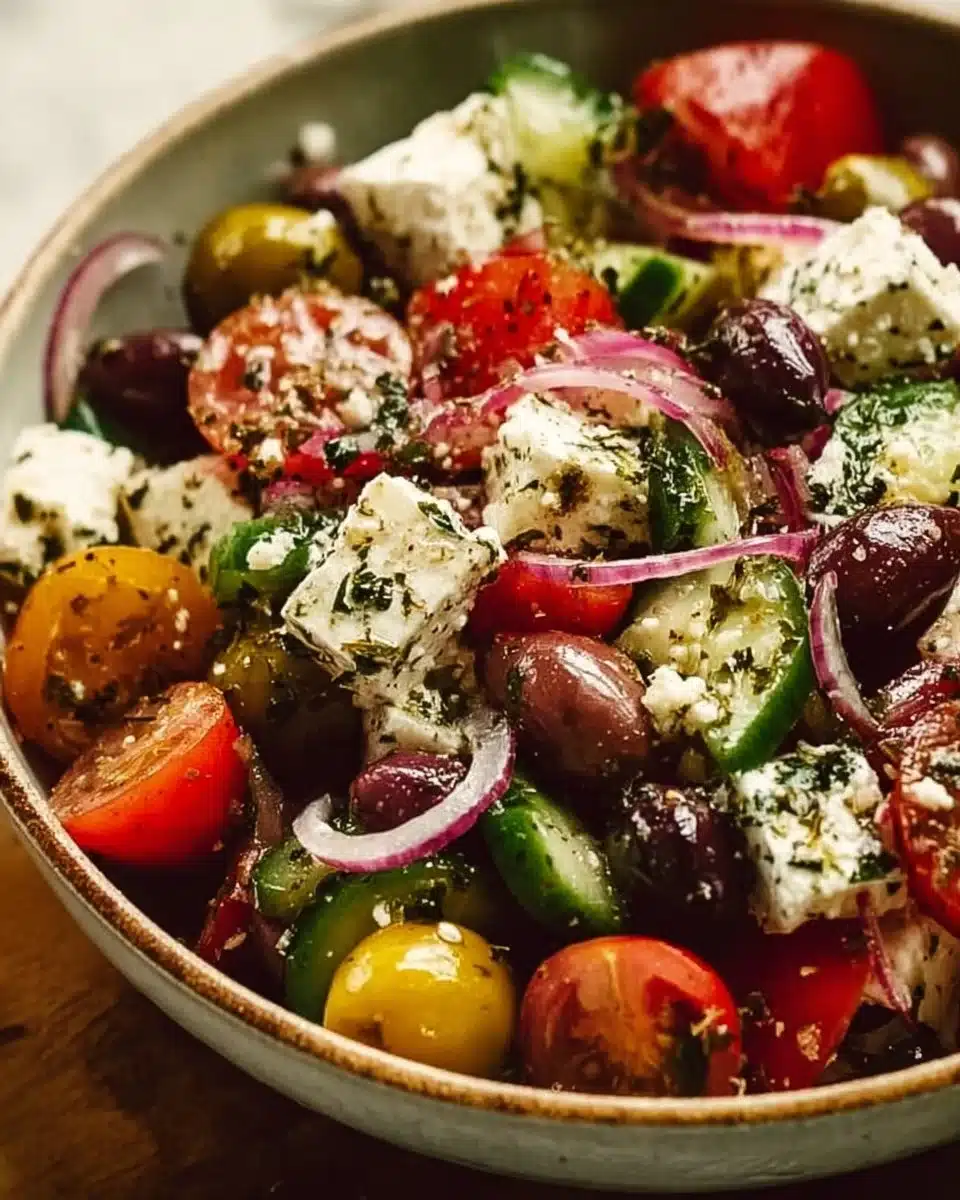
Step-by-Step: How to Make Best Greek Salad
“Cooking isn’t about perfection. It’s about enjoying every delicious step.”
Before we chop or whisk anything, take a deep breath and set up a small workspace. Lay out a cutting board, a sharp chef’s knife, a medium bowl for the salad, and a smaller bowl or jar for the dressing. Having everything in reach makes the process smooth and relaxed.
Overview:
- Preparation time: about 15 to 20 minutes. This is a fast, fresh salad.
- Active skills: chopping, whisking, tossing, tasting.
- Tools: sharp knife, cutting board, mixing bowl, whisk or fork, measuring spoons, and a jar with a lid if you prefer to shake the dressing.
If you want a slightly different take on the dressing texture, you can whisk it in a bowl or combine it in a jar and shake. Shaking in a jar gives a smoother emulsion quickly and saves a dish. Next, we’ll gather ingredients and walk through each step slowly so you feel confident and capable.
Ingredients You’ll Need for Best Greek Salad
1 large cucumber (diced) (Use fresh, firm cucumbers.)
1 pint grape tomatoes (halved) (Choose vibrant, ripe tomatoes.)
1 green bell pepper (diced) (For a slightly sweeter flavor, use a yellow bell pepper.)
½ cup Kalamata olives (halved) (Can substitute with capers if needed.)
½ red onion (thinly sliced) (Soak in cold water if the onion flavor is too strong.)
4 ounces feta cheese (crumbled) (Can be replaced with goat cheese or ricotta.)
⅓ cup red apple vinegar (Use a good-quality vinegar for bright acidity.)
1 large lemon (juiced) (Freshly squeezed enhances flavors.)
1 teaspoon Dijon mustard (Adds body and a gentle tang.)
2 cloves garlic (minced) (Minced for better integration with the dressing.)
½ teaspoon dried oregano (Fresh oregano can also be used.)
¼ teaspoon salt (Adjust to taste.)
¼ teaspoon black pepper (Add more for extra heat.)
½ cup olive oil (Extra virgin is recommended for flavor.)
Notes:
- Use extra virgin olive oil for the best flavor, but a lighter olive oil is fine if that’s what you have.
- If you prefer a milder onion flavor, soak the slices in cold water for five minutes, then drain.
- For a dairy-free version, omit the feta and add toasted pine nuts or chickpeas for richness.
- If Kalamata olives are too strong for your guests, mix them with mild green olives or use capers.
Directions: Cooking with Confidence
Preparation
- Wash and dry your produce. This is a small step that makes a big difference. Clean vegetables are brighter and more pleasant to handle. Pat cucumbers and tomatoes dry so the dressing clings better.
- Dice the cucumber into bite-sized pieces. Aim for pieces that are about the same size as your tomato halves so every spoonful feels balanced. If your cucumber has a thick skin or large seeds, you can peel and scoop the seeds, but I often keep them for texture.
- Halve the grape tomatoes and gently shake out any excess juice before adding to the bowl. This keeps the salad from becoming watery while preserving tomato flavor.
- Core and dice the bell pepper into small squares. Remove seeds and membrane so the pepper reads sweet and crisp.
- Thinly slice the red onion. If you want tiny rings rather than slices, rotate the onion for a finer cut. If the onion smells strong, place the slices in cold water for five minutes and then drain to mellow the flavor.
- Halve the Kalamata olives or leave them whole if you prefer bigger, briny bites. Halved olives spread flavor more evenly through the salad.
- Crumble the feta with your fingers or the back of a spoon to create varied textures. Smaller crumbs melt into the salad, while larger chunks add creamy bites.
Dressing
- In a small bowl or a jar with a lid, add the red apple vinegar, freshly squeezed lemon juice, Dijon mustard, and minced garlic. The lemon adds brightness while the vinegar brings a gentle tang.
- Add dried oregano, salt, and black pepper. If using fresh oregano, chop finely and add near the end for a fresher herbal note.
- Slowly whisk in the olive oil until the dressing looks glossy and slightly thickened. If you are using a jar, add the oil, seal the lid, and shake vigorously for 20 to 30 seconds until emulsified.
- Taste the dressing and adjust: more lemon for brightness, more olive oil for a rounder mouthfeel, or a pinch more salt if the feta and olives are not giving enough punch.
Combining
- Add the cucumber, tomatoes, bell pepper, and red onion to a large mixing bowl. Toss gently to mix textures.
- Pour about two-thirds of the dressing over the vegetables and toss again until vegetables glisten. Start with less dressing so you can add more if needed. You want the salad coated, not swimming.
- Scatter the halved Kalamata olives and crumbled feta over the top. Fold gently to distribute without breaking up the feta too much.
- Taste and finish with the remaining dressing if needed. I often add an extra squeeze of lemon at the end to sharpen the flavors.
- Let the salad rest for 5 to 10 minutes at room temperature if you have time. This short resting period lets flavors harmonize without losing freshness.
A few sensory cues to watch for:
- The dressing should look glossy and cling lightly to a spoon.
- Vegetables should have a crisp, slightly wet appearance after tossing, not soggy.
- Feta should offer creamy pockets against the crunchy vegetables.
- Olives should offer bursts of salt and richness in contrast to the lemony dressing.
If you want a stacked or composed look, arrange the cucumbers in the center of a shallow bowl, ring with tomatoes, sprinkle onions and peppers strategically, then place olives and feta on top. This is more work, but it makes an appealing presentation for guests.
How to Serve Best Greek Salad and Make It Shine
This salad is splendid on its own or as a side. Serve it chilled or at cool room temperature. It pairs especially well with grilled meats, roasted vegetables, or simple flatbreads.
Serving ideas:
- For a light dinner, serve alongside grilled lemon chicken or broiled fish, and add a crusty loaf to soak up juices.
- Turn it into a meal by serving over a bed of baby greens or mixed lettuces, then adding sliced avocado and toasted pita triangles.
- For a Mediterranean-themed spread, place this salad next to hummus, tzatziki, and warm pita for a casual and colorful table.
Plating tips:
- Use a wide, shallow bowl so the salad spreads out and each piece is visible.
- Scatter a few extra olive halves and larger feta chunks on top for a rustic, inviting look.
- Finish with a light drizzle of extra virgin olive oil and a fresh sprinkle of oregano or chopped parsley.
For a picnic or to bring to a party, place the dressing in a separate jar and toss just before serving to keep vegetables crisp. If transporting already dressed, choose a sturdy bowl and keep it chilled until it’s time to serve.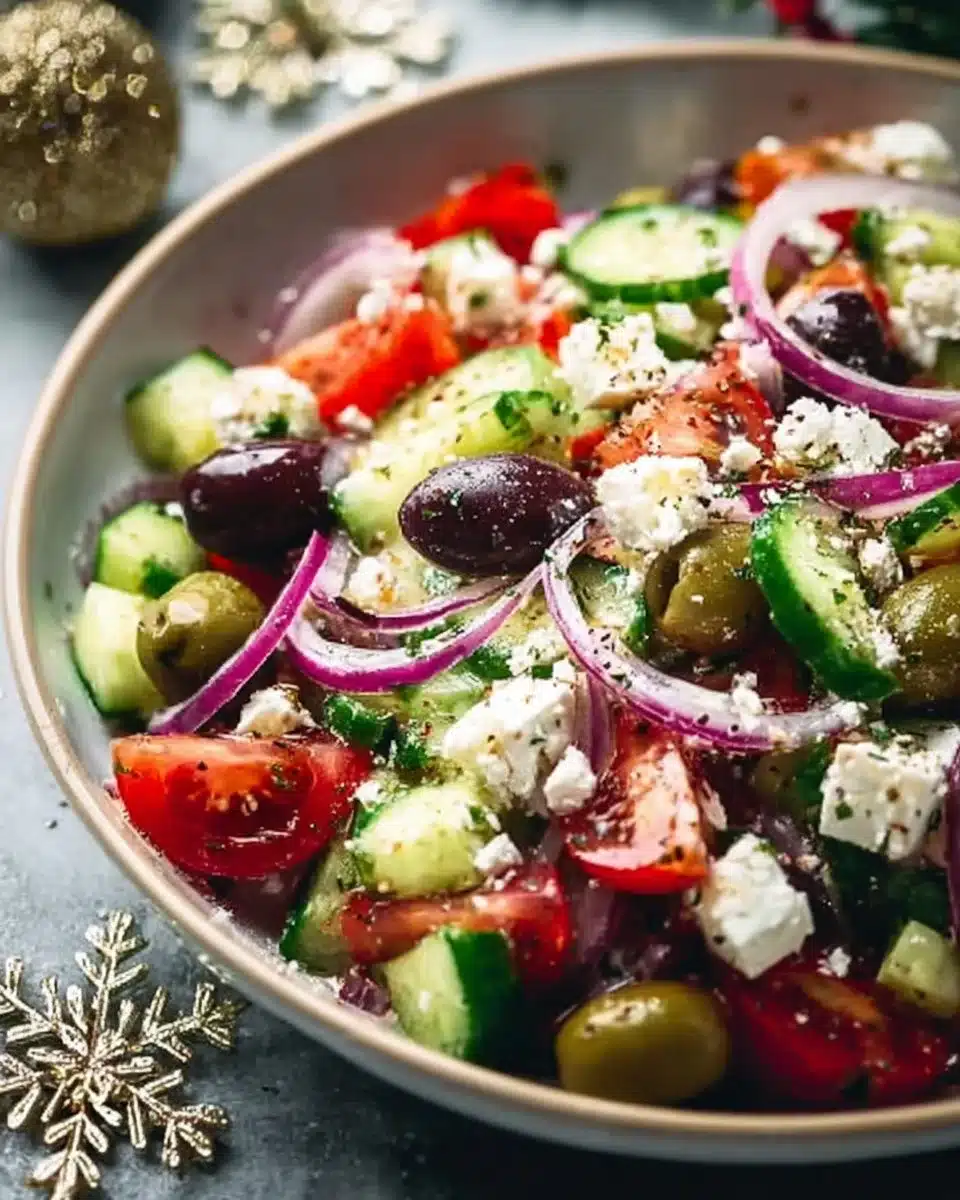
How to Store Best Greek Salad for Later
Greek salad is best eaten fresh, but it stores well for short-term enjoyment when handled correctly.
Refrigeration:
- Store leftovers in an airtight container in the refrigerator for up to 2 days. Beyond that, vegetables like tomatoes and cucumbers will release more liquid and become softer.
- If you plan to store the salad for more than a few hours, keep the dressing separate and add it just before serving. This preserves crispness.
- If the salad is already dressed, give it a gentle toss before serving to redistribute the dressing. Use a slotted spoon to serve if there is excess liquid at the bottom.
Freezing:
- Do not freeze this salad. The high-water-content vegetables will become mushy when thawed.
Refresh tips:
- If the salad has lost a bit of its snap, briefly toss in a few fresh cucumber or bell pepper pieces and a squeeze of lemon.
- To revive flavors after refrigeration, let the salad sit at room temperature for 15 minutes before serving. Cold flavors can mute the aroma and brightness of the dressing.
Meal prep:
- If making ahead for lunches, assemble the vegetables in a container and pack dressing separately in a small jar. When ready to eat, pour the dressing over, toss, and enjoy.
- For faster weekday lunches, pre-chop vegetables and store in separate containers, then combine and dress the same day.
Clara’s Tips for Success
- Use a sharp knife and steady motion. A dull knife crushes vegetables and makes them release more water. Sharpening your knife is one of the best ways to improve results quickly.
- Taste as you go. A small squeeze of lemon, a pinch of salt, or a splash more olive oil can make the salad sing. Make adjustments slowly, and taste between additions.
- Keep textures in mind. Balance crunchy, soft, and creamy elements so every forkful is interesting. If your salad lacks crunch, add toasted nuts or seeded bread crumbs for a contrast.
- Don’t fear raw garlic. If you want a milder garlic flavor in the dressing, mince the garlic very finely or grate it on a microplane, then let it rest in the acid for five minutes to mellow.
- Make the dressing in a jar. It saves cleanup and gives you a great emulsion with just a few shakes. Whisk if you want more control over texture.
Simple Variations to Try
- Greek Salad with Chickpeas: Add a cup of drained, rinsed chickpeas for extra protein. They add heartiness and a nutty texture that pairs nicely with feta.
- Grilled Vegetable Greek Salad: Char the bell peppers and tomatoes on a hot grill for a smoky depth. Cool slightly, then chop and combine with the cucumber and dressing.
- Herby Greek Salad: Substitute fresh oregano and add chopped dill or mint for a garden-fresh twist. Fresh herbs change the aroma and add brightness.
- Pita Crouton Salad: Toast torn pita pieces in olive oil until crisp and sprinkle them on top just before serving to add a warm crunch.
- Citrus-Kissed Greek Salad: Use a mixture of lemon and orange juice in the dressing for a slightly sweeter acidity that works well with sweeter tomatoes.
Each variation follows the same basic method: prepare ingredients, mix a balanced dressing, toss gently, and taste. Small changes produce meaningful differences, and that sense of control is part of the joy of cooking.
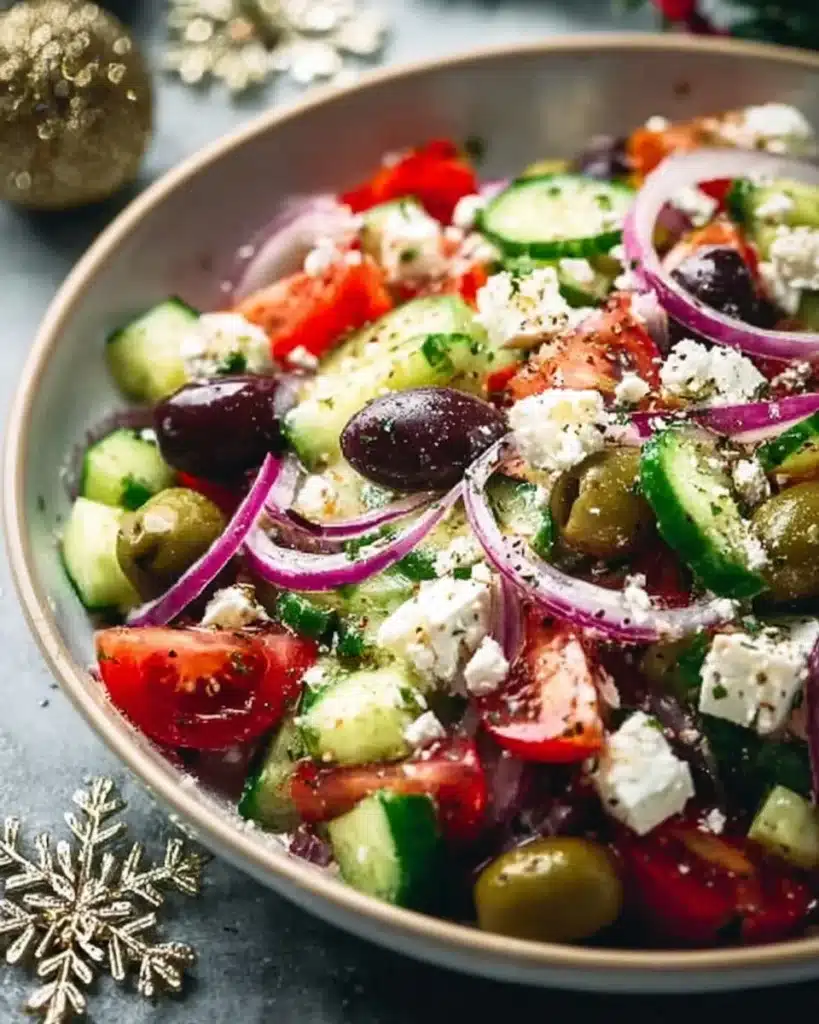
Best Greek Salad
Ingredients
Method
- Wash and dry your produce. Clean vegetables are brighter and more pleasant to handle.
- Dice the cucumber into bite-sized pieces.
- Halve the grape tomatoes and gently shake out any excess juice.
- Core and dice the bell pepper into small squares.
- Thinly slice the red onion. Soak in cold water if needed.
- Halve the Kalamata olives or leave them whole.
- Crumble the feta with your fingers or the back of a spoon.
- In a small bowl or jar, add red apple vinegar, lemon juice, Dijon mustard, and minced garlic.
- Add dried oregano, salt, and black pepper.
- Slowly whisk in the olive oil until the dressing looks glossy.
- Taste and adjust seasoning as necessary.
- Add the cucumber, tomatoes, bell pepper, and red onion to a large mixing bowl. Toss gently.
- Pour about two-thirds of the dressing over the vegetables and toss again.
- Scatter the halved olives and crumbled feta over the top and fold gently.
- Taste and finish with the remaining dressing if needed.
- Let the salad rest for 5 to 10 minutes at room temperature if time allows.
Nutrition
Notes
Tried this recipe?
Let us know how it was!FAQs About Best Greek Salad
Can I make this ahead of time?
Yes, kind of. Prep the vegetables and store them separately from the dressing if you plan to keep the salad for more than a few hours. If you dress it early, it will still be fine for a few hours, but the cucumbers and tomatoes will soften over time. For the best texture, add dressing right before serving.
What can I use instead of Kalamata olives?
You can use green olives, which are milder, or capers for small briny pops. If you want to avoid olives entirely, try adding toasted sun-dried tomatoes or marinated artichoke hearts for a different salty-sour element.
Is there a vegan version?
Absolutely. Omit the feta and add roasted chickpeas or toasted nuts to add richness. There are also plant-based feta alternatives that mimic the tangy creaminess if you want a closer flavor match.
How much dressing should I use?
Start with about two-thirds of the dressing and toss. Add more only if needed. You want the vegetables to be coated, not drenched. If you have leftovers, store the dressing separately.
Can I add lettuce or greens?
Yes. Adding a handful of sturdy greens like romaine or baby spinach makes this salad more like a composed main course. Add greens just before serving so they do not wilt.
How do I prevent watery salad?
Pat ingredients dry before tossing. Use ripe tomatoes but not overripe. If you must dress the salad ahead of time, keep it chilled and use a slotted spoon when serving to leave excess liquid behind.
Final Encouragement or Closing Note
Cooking is a practice, not a test. Best Greek Salad is forgiving and joyful, and it gives you room to make it your own. Take your time with the first run through, trust your taste, and remember that fresh ingredients make a huge difference. Small choices, like using a good olive oil or squeezing fresh lemon, add up to something truly satisfying.
You’ve already learned the rhythm: prep, whisk, toss, taste. Each time you make this salad you’ll notice small improvements in technique and confidence. Invite a friend over, set a pretty bowl on the table, and enjoy the simple pleasure of a well-made dish. You’ve got this.
Conclusion
If you want another take on a classic, try the Greek Salad Recipe – Love and Lemons for a fresh perspective on ingredients and presentation. For a well-tested variation and extra serving ideas, check out the Best Greek Salad Recipe for inspiration and helpful tips.