oral rehydration solution recipe is one of those things you never think you will need until you really, really need it. Maybe someone in your house has a stomach bug, you just got back from a long hike on a hot day, or your kid is acting wiped out after a round of diarrhea. I have been there, standing in the kitchen, wishing I had something simple that actually works and does not taste like neon sports drink. This is my go to homemade mix, the one I keep coming back to because it is easy, cheap, and made from stuff I already have. And yes, I will keep this super practical so you can make it fast.
Understanding the Main Concept
Let us keep it simple. When you are dehydrated from vomiting, diarrhea, fever, or heavy sweating, your body is not just losing water. You are also losing electrolytes, mainly sodium and potassium, plus a little sugar can help your body absorb that sodium and water better.
An oral rehydration solution recipe is basically a balanced drink that pairs clean water with the right amount of salt and sugar. The balance matters. Too much sugar can make diarrhea worse. Too much salt can be harsh and unpleasant. The goal is gentle, steady rehydration, not a sweet treat.
I like to think of it like soup logic. If you ever made a broth and it tasted flat, a pinch of salt woke it up. ORS is kind of like that, but measured so it supports your body when it is running low.
Random side note from my kitchen life: after I make a batch, I usually label the jar because someone in my family will absolutely pour it into their cup thinking it is lemonade. If I am serving actual lemonade vibes later, I do something fun like cookies, and this is where I stash links for later baking days like these apple cinnamon oatmeal cookies that smell like a candle in the best way.
Key Benefits and Applications
This is why I actually keep coming back to this homemade ORS idea. It is not fancy, but it is useful in real life.
When it is helpful
Here are the moments when I reach for an oral rehydration solution recipe at home:
- Stomach bugs with vomiting or diarrhea, once the person can keep small sips down
- After sweating a lot like yard work, sports, long walks, or a heat wave
- Travel days when you are not eating normally and feel a little shaky
- After a fever when you have been sweating and not drinking enough
It is also a nice option if you want something gentler than many sports drinks. Those can be super sweet, and when your stomach is already feeling touchy, sweet can be too much.
I also like how budget friendly it is. Water, salt, and sugar are usually already in the pantry. If you have an orange or banana around, you can pair the drink with that for extra potassium through food, but the drink itself is the main thing.
And because this is my food blog brain talking, when everyone is feeling better and hungry again, I bring out something comforting but not heavy. I have a soft spot for cozy soups like this butternut squash soup, especially when the weather is weird and your body just wants warmth.
Common Misconceptions
I have heard a lot of DIY hydration advice over the years, and some of it is not great. Here are a few things I wish more people knew before mixing things up.
Misconception 1: Any salty drink works.
Not really. You need the salt and sugar in the right range so your body can absorb it well. A random salty mix can be too salty, and then nobody wants to drink it anyway.
Misconception 2: Sports drinks are the same as ORS.
Sports drinks can help for light dehydration from exercise, but many are lower in sodium and higher in sugar than what is ideal for diarrhea related dehydration. ORS is made for rehydration when you are actively losing fluids.
Misconception 3: More sugar means more energy, so it must be better.
Too much sugar can pull water into the gut and may worsen diarrhea. This is why the measured amount matters.
Misconception 4: If you are dehydrated, chug a huge glass quickly.
Small sips are usually easier, especially if nausea is involved. Think steady and gentle. I literally use a teaspoon for kids sometimes and just keep offering it.
If you are dealing with more complex medical situations like bariatric recovery, hydration can be its own whole topic. I have shared some gentle, easy options like this bariatric gelatin jello recipe that some people find soothing when they need something light.
Step-by-Step Guide or Methodology
Ok, let us make it. This is the method I use at home. It is based on the widely used idea of combining water, sugar, and salt in a specific ratio. If you have measuring spoons, use them. If you do not, I will give you some practical tips too.
What you will need
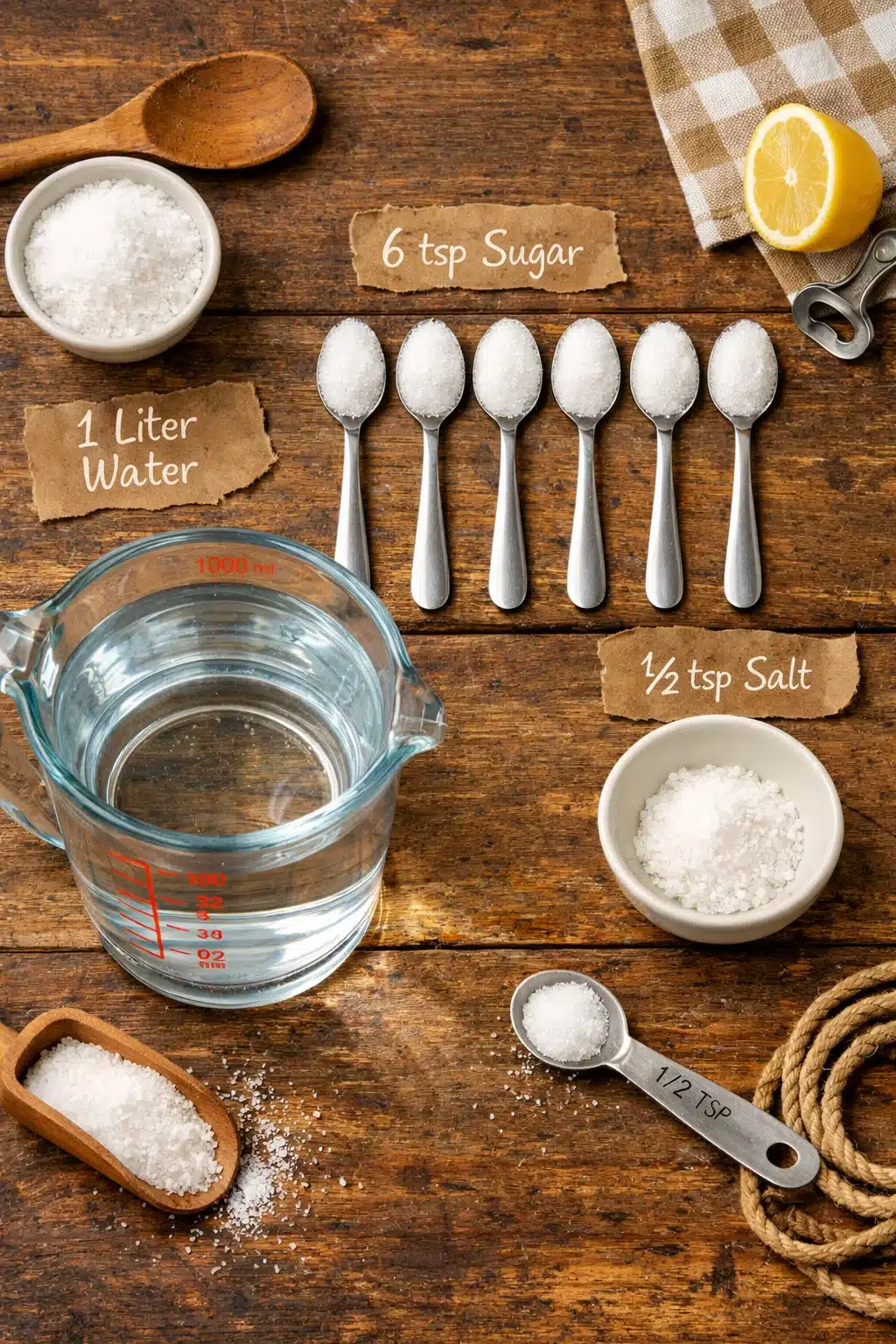
- 1 liter of clean water (about 4 and 1 quarter cups)
- 6 level teaspoons of sugar
- 1 half level teaspoon of table salt
How to mix it
1) Start with clean hands and a clean container. A big jar with a lid is perfect.
2) Pour in 1 liter of water. If you are using bottled water, great. If you are using tap water and you are not sure about safety, boil it and cool it first.
3) Add 6 level teaspoons of sugar and 1 half level teaspoon of salt.
4) Stir or shake until everything dissolves. Taste it. It should taste lightly sweet and a bit salty, kind of like a very mild sports drink. If it tastes like ocean water, do not drink it, you likely added too much salt. Dump it and start over.
How to drink it
If nausea is present, go slow. Like very slow.
- Adults can start with small sips every few minutes
- Kids can do teaspoons every 1 to 2 minutes if needed
- If vomiting happens, wait 10 minutes and start again with smaller sips
Storage tip: I keep it covered in the fridge and use it within 24 hours. After that I toss it and make a fresh batch if we still need it.
Flavor tip: I usually keep it plain because flavorings can change the balance. But if someone refuses to drink it, a tiny splash of citrus can help. Keep it minimal, and do not turn it into juice.
Once everyone is on the upswing, I switch from survival mode drinks back to real food. Something light like a crunchy salad can feel amazing, and I love this best Greek salad recipe when appetites return.
Resources for Further Learning
I am a home cook and a parent, not your doctor, so I always like to point to solid references too. If you want printable ratios and clear instructions from health organizations, these kinds of resources are comforting to have bookmarked. Also, if symptoms are severe, dehydration can become serious fast, especially for babies, older adults, and anyone with medical conditions. When in doubt, call a clinician.
And just because life is not always about rehydration, if you are looking for something happy and snacky for normal days, I am obsessed with these raspberry cookie recipes. They are my little mood booster when everyone is healthy again.
FAQS Common Questions
1) Can I make a smaller batch?
Yes. Just keep the ratio the same. For 500 ml water, use 3 level teaspoons sugar and 1 quarter teaspoon salt.
2) Can I use honey instead of sugar?
I do not recommend it for this purpose because measuring is less exact and it can be harder on sensitive stomachs. Plain sugar is the most reliable.
3) Is this safe for kids?
In general, ORS is commonly used for kids, but if you have an infant, ongoing vomiting, bloody stools, signs of severe dehydration, or you are unsure, call your pediatrician right away.
4) How do I know if dehydration is serious?
Red flags include very little urine, extreme sleepiness, dizziness, dry mouth with no tears, fast breathing, or symptoms that are getting worse. That is the moment for medical care, not just a homemade drink.
5) Can I drink this even if I am not sick?
Sure, but most people do not need it day to day. For normal hydration, water and regular meals do the job.
A friendly wrap up before you head to the kitchen
Keeping an oral rehydration solution recipe in your back pocket is one of those quiet life skills that really pays off. You now have the simple ratio, the mixing steps, and the little tips that make it easier to sip when you do not feel great. If you want more official printable guidance, check out Oral Rehydration Solution Recipes | Alberta Health Services and this helpful booklet, STAYING HYDRATED WITH ORAL REHYDRATION SOLUTION (ORS). Try a batch, keep it chilled, and take it slow. I hope it helps you feel steady again, one small sip at a time.

Oral Rehydration Solution
Ingredients
Method
- Start with clean hands and a clean container. A big jar with a lid is perfect.
- Pour in 1 liter of water.
- Add 6 level teaspoons of sugar and 1 half level teaspoon of salt.
- Stir or shake until everything dissolves. Taste it to ensure it is lightly sweet and a bit salty.
- For adults, start with small sips every few minutes.
- For kids, provide teaspoons every 1 to 2 minutes if needed.
- If vomiting occurs, wait 10 minutes and start again with smaller sips.